
Your AI-era company is scaling.Your execution system is not.
Execution architecture, defined
Execution architecture is the layer above your tools. It decides who owns each outcome, where decisions get made, how work crosses from one function to another, when an issue escalates, and what the leadership team looks at every week.
None of them moves a decision.
That takes an owner, a route, and a cadence, and most scaling companies never design one. It accumulates instead, one workaround at a time, until the founder is the routing layer for everything.
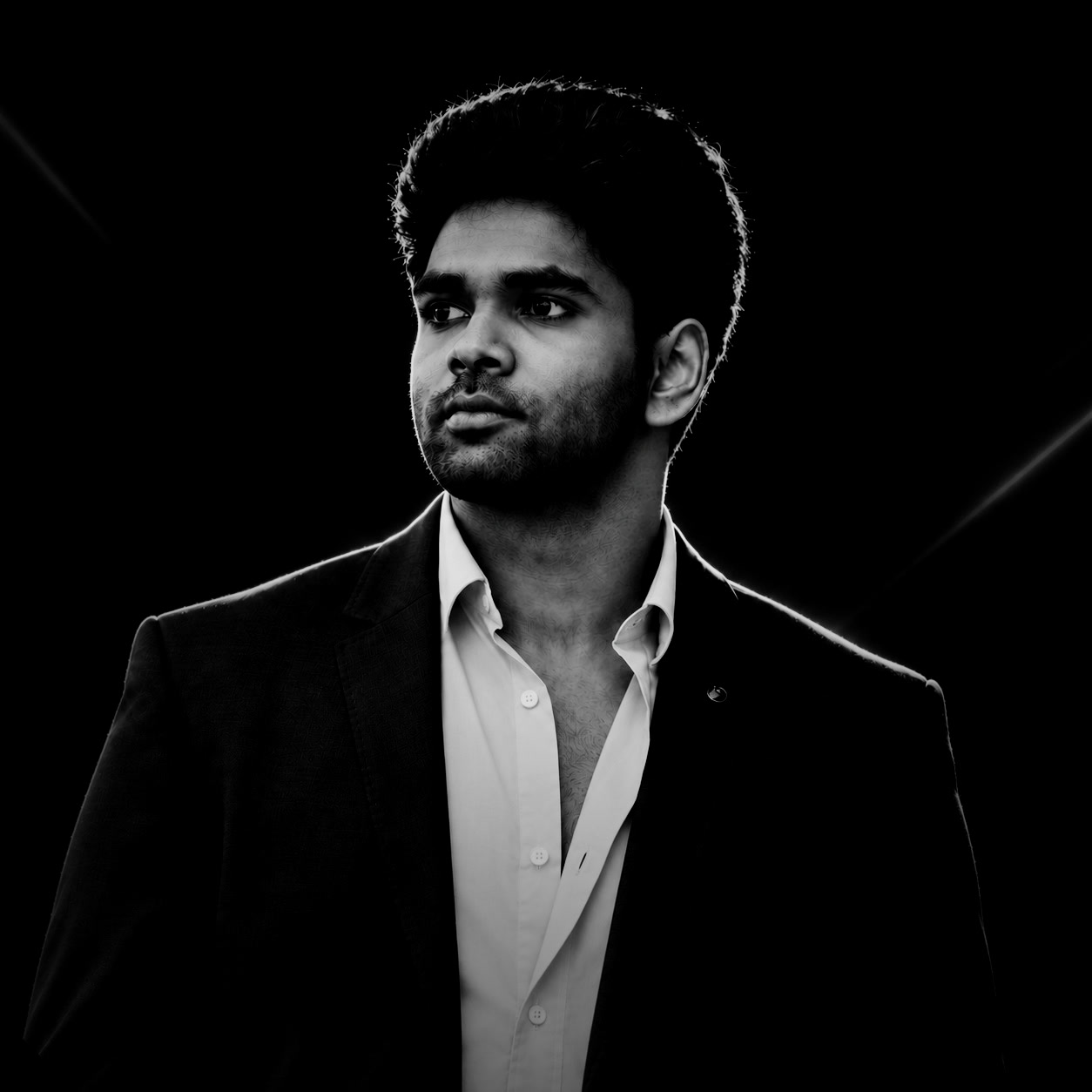 Vishnu Balasundaram
The Ops Layer designs and installs that layer inside founder-led technology companies, typically 60 to 200 people, that are adopting AI faster than their operating system can absorb it. The work is founder-led and senior-led: you work directly with the founder, who ran cross-functional programs at SolarWinds and OLIVER Agency before productizing the operating model into The Ops Layer.
If any of these sound familiar, the problem is structural
The same kinds of decisions land on your desk every week, and the team has learned to wait for you rather than decide.
Start with the SnapshotProduct, Engineering, and GTM each ship. The handoffs between them are where the time goes.
See how the Execution OS handles handoffsThe weekly leadership meeting is full of information and produces almost no decisions.
Read about operating rhythmYou can see everything and nothing moves earlier because of it.
How Measurement works in the Execution OSThe hire treated the symptom. The routing problem stayed.
Why hiring is a distress signalMore output means more decisions, more exceptions, more approvals. All of it lands on the one decision system the company actually has.
Why this is happening nowAI increased output.It did not increase clarity.
6%
Six percent of respondents qualify as AI high performers: they attribute at least 5 percent of EBIT to their use of AI and call the impact significant.
80%
Eighty percent of respondents who use AI in their roles say it improved their individual productivity, in McKinsey's 2026 State of AI survey.
That gap has not moved in a year.
Nearly three quarters of the high performers fundamentally redesigned their workflows around AI. Among everyone else, roughly one in four did.
Deloitte's 2026 data tells the same story from the other side.
Almost half
Nearly half of respondents (48 percent) say their organization introduced AI without redesigning the workflows or roles it sits within.
12%
Twelve percent report redesign at scale, with a new operating model behind it.
Sources: McKinsey, The state of AI in 2026: On the road to ROI, August 2026. Deloitte, Enterprise AI trends in 2026: AI transformation strategy opportunities and predictions, June 2026.
Here is what that looks like inside a 90-person company.
A proposal that took three hours now takes three minutes.
Then Finance reviews it,
Legal joins late,
the exception reaches the founder,
the brief changes,
and AI regenerates it in three minutes.
Same chain. Same bottleneck.
The task got faster. The end-to-end cycle did not.
You did not remove the bottleneck. You gave it a faster supply line.
Compute, tokens, and copilots do not convert into ROI without operating-model redesign.
That is the work.
Three steps. Each one earns the next.
The Ops Layer is built around one journey. You can enter at any step, and most founders start at the first.
Execution Architecture Snapshot
Ten diagnostic questions about how you believe your execution system runs today. Every submission is read personally, and a one-page Snapshot comes back within one working day: the pattern your answers point to, the likely primary constraint, and what to measure this week. It is a hypothesis, not an audit. The Sprint is where the hypothesis gets tested against evidence.
Get your Snapshot7-Day Clarity Sprint
A seven-day organizational diagnostic that validates where execution is breaking, sets a starting baseline for founder escalations, decision cycle time, and rework where the evidence allows, and leaves you with a prioritized direction and a possible 90-day roadmap. Thirty days of async support follow.
See the SprintExecution OS Install
The core engagement. The validated decisions are designed in detail across the seven components of the Execution OS, ratified, and put to work at the depth agreed in scoping:
Designed, ratified, put to work.
See the InstallWhat execution looks like once it has an architecture
Decisions move earlier.
Cross-functional tradeoffs get resolved by a named owner inside a defined boundary, and the founder sees the exceptions, not the queue.
Issues surface before deadlines, not at them.
Escalation thresholds are agreed before the room needs them, so blockers travel upward when they should and stop drifting through three meetings and a thread nobody finishes.
The weekly meeting produces decisions with owners and dates.
Status lives in the tools. The room is for what the tools cannot close.
Handoffs stop being where the time goes.
Every critical handoff has a sender, a receiver, a required input, and a definition of done.
AI delegation happens on purpose.
Once ownership and boundaries are clear, the company can decide what stays human, what becomes a rule, and what an agent is allowed to do, with an escalation path for what it cannot.
Founder time goes to judgment.
Signal becomes action. Exceptions do not become drift.
What senior operators say about the work
Vishnu has been a force multiplier for data, bringing our team into an agile sprint process that reduced stress, improved effectiveness, and brought clarity to high-priority analytics projects. He commits daily, aligns cross-functional teams, and drives execution with focus and energy.
I've learned from you, loved your enthusiasm, and found your judgement and process to be exceptional. I have no doubt you will be superb at whatever is next.

Vishnu demonstrated exceptional leadership in managing the Data Quality program across global stakeholders. His structured communication, stakeholder alignment, and delivery rigor set a new standard for international program execution.
The record behind the work
30%
reduction in delivery slippage through an org-wide operating cadence at SolarWinds
$2M+
enterprise data program led across BI, Engineering, and Product
90+
workflows redesigned into operational playbooks adopted globally at OLIVER Agency
200+
recurring reports automated, removing 1,000+ manual hours every month
Programs delivered for these brands through prior agency roles at OLIVER. These organizations are not clients of The Ops Layer.






Testimonials, logos, and metrics come from prior employment at SolarWinds and OLIVER Agency. These organizations are not clients of The Ops Layer.
See the full Execution ProofVishnu BalasundaramBuilt by someone who has run this inside the enterprise and inside the agency
Vishnu Balasundaram spent 10+ years leading cross-functional programs at the intersection of data, operations, and product. At SolarWinds he led execution across a $2M+ enterprise data program and reduced delivery slippage by 30% through an org-wide operating cadence. At OLIVER Agency he ran APAC program delivery for enterprise accounts including Netflix, 3M, and Reckitt, redesigned 90+ workflows into playbooks adopted globally, and automated reporting that removed 1,000+ hours of manual work a month.
Most operators in this space have enterprise scale or agency delivery under client pressure. He has both. The Ops Layer is that operating model, productized for founder-led companies.
Questions founders ask before they apply
What do you actually leave behind?
That depends on the engagement. The Clarity Sprint leaves you with three evidence-based outputs: a validated current state, a T0 measurement baseline or measurement protocol, and prioritized recommendations for what should change. The Execution OS Install takes the next step: detailed decision rights, ownership boundaries, handoffs, escalation rules, and operating rhythms are designed, approved, and implemented at the depth agreed in scope. The Sprint establishes what needs to change. The Install makes the approved changes operational.
Is this only for AI companies?
No. AI-native teams feel the problem earlier because AI multiplies output faster than the operating layer can absorb it. The underlying problem exists in any company where decision-making and ownership have stopped scaling cleanly. The best fit is a founder-led technology company, roughly 60 to 200 people, that adopts AI in its operations rather than building AI as its product.
How is this different from hiring a COO or a Chief of Staff?
The Ops Layer sits at the stage before a full-time COO hire, and it makes that hire more effective when it comes. You are not buying another layer of management. You are buying the operating architecture that makes the next layer of management work. The question worth asking before any ops hire: is your next operator stepping into a system, or inheriting fog?
How is this different from project management or PMO support?
Project management tracks work. A PMO adds process. The Ops Layer works on the underlying structure itself: who decides, what escalates, where authority sits, and how a decision moves from one function to the next. Once that structure is right, project management gets easier. Without it, more tracking produces more updates and the same number of decisions.
Do you guarantee outcomes?
No, and the honest answer is that nobody can. What is guaranteed is senior-level attention on every engagement, an honest diagnosis built from evidence rather than interviews alone, and structure designed around your team's reality instead of a template. Each engagement establishes agreed measurement definitions for founder escalations, decision cycle time, and rework. Where sufficient evidence exists, we establish a defensible baseline and state its confidence. Where it does not, we establish a measurement protocol and clearly identify what remains unobserved. Improvements are only claimed where comparable evidence supports them.
Where should I start?
The Snapshot, if you want to see whether the pattern applies to you. The Sprint, if you already know it does and want it diagnosed properly. Most engagements begin at the Sprint.
Ready to scale withoutbecoming the control plane?
Install the structure your team needs before AI-speed execution turns complexity into drift. A focused operating reset costs far less than the delays, rework, and missed priorities it prevents.
Free, reviewed personally, back within one working day.
$5,000. Two slots a month.
Questions first? Write to vishnu@theopslayer.com.